
- /
Is Spring 2026 the Right Time to Buy Your First Home? A Data-Driven Breakdown
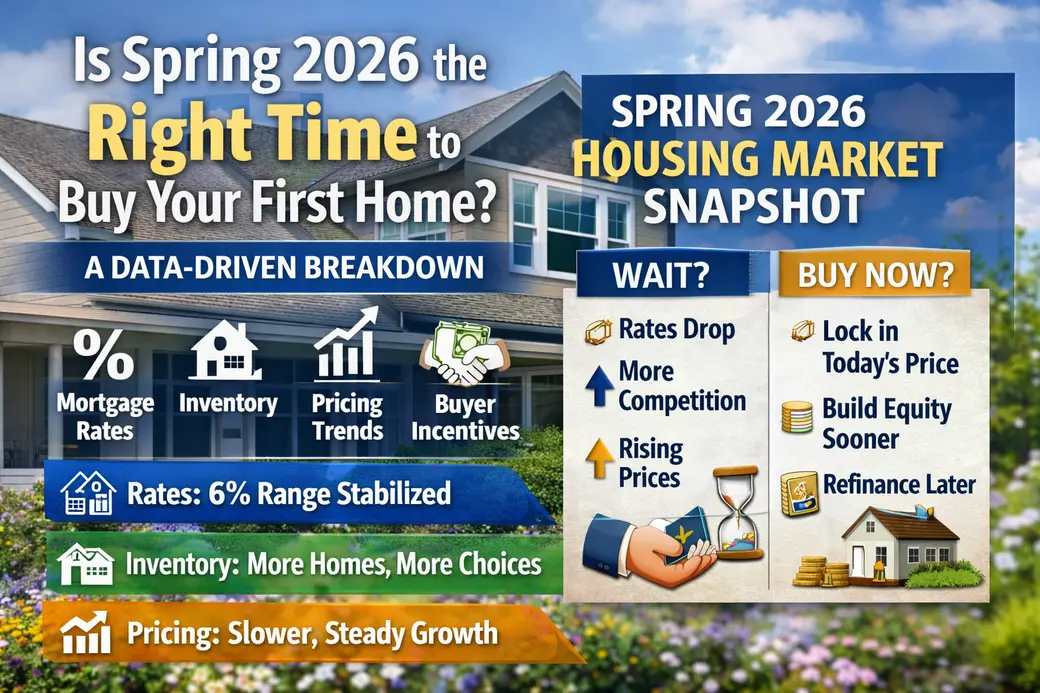
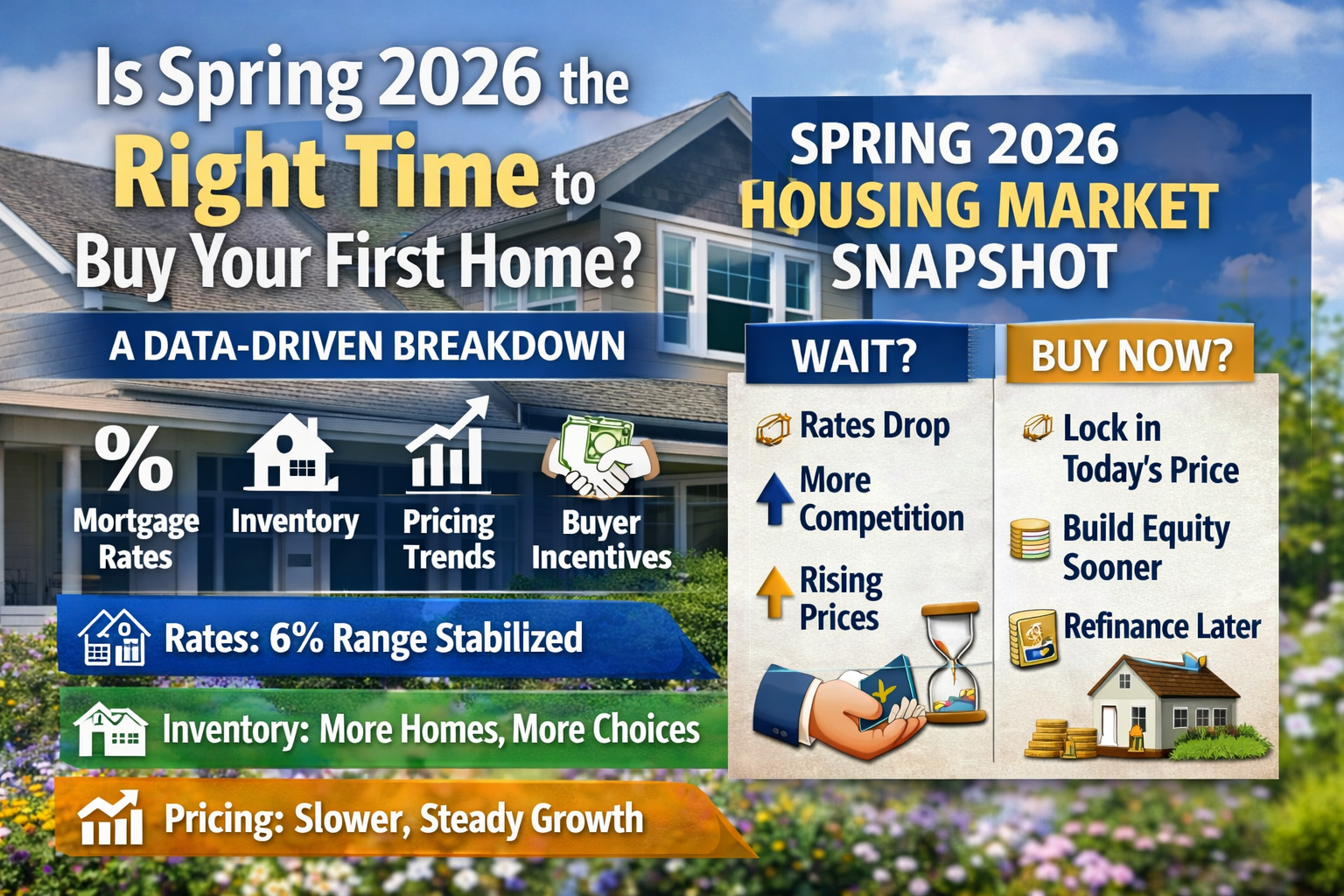
Spring is traditionally the most active season in real estate. More listings hit the market, more buyers begin touring, and momentum builds quickly. But for first-time buyers in 2026, the real question isn’t just “Is it a good season?” — it’s “Does the data support making a move right now?”
Let’s break it down strategically.
1. Mortgage Rates: Stabilization Over Shock
After the volatility of the past few years, mortgage rates have largely stabilized in the 6% range, with some adjustable and buydown options dipping into the high 5s.
What matters most for first-time buyers:
-
Rates are no longer rising aggressively.
-
Forecasts suggest moderate fluctuation rather than dramatic drops.
-
Waiting for a “return to 3%” is not a realistic strategy.
Historically speaking, today’s rates are closer to long-term averages than pandemic-era lows. The real financial risk isn’t slightly higher rates — it’s continued home price appreciation while waiting.
2. Inventory: Spring Brings Opportunity (and Competition)
Spring 2026 is bringing more homes to market compared to late 2025. That means:
-
More options to choose from.
-
Fewer “panic bidding” scenarios than peak 2021–2022 conditions.
-
Increased new construction incentives.
However, increased inventory also brings increased buyer activity. The best homes — well-priced, well-located properties — are still moving quickly.
For first-time buyers, this is a balanced market window:
-
You have negotiation leverage.
-
Sellers are more flexible.
-
Builders are offering rate buydowns and closing cost credits.
That combination is rare.
3. Pricing Trends: Slower Growth = Strategic Entry Point
Home price growth has moderated. Instead of double-digit appreciation, many markets are seeing steady, sustainable increases.
Why this matters:
-
You’re not buying at an overheated peak.
-
Equity growth potential remains strong.
-
The likelihood of dramatic price drops remains low due to limited long-term supply.
In many growing metro areas, including markets like Raleigh and other Sun Belt cities, population growth and job expansion continue to support housing demand.
4. First-Time Buyer Advantage in 2026
There are more tools available today than many buyers realize:
-
Rate buydowns (2-1 or permanent)
-
Seller-paid closing costs
-
Down payment assistance programs
-
VA, FHA, and low-down conventional options
-
Builder incentives in new communities
This isn’t 2021 anymore — buyers have options.
5. The Cost of Waiting
Let’s analyze the alternative.
If rates drop:
-
Buyer demand increases.
-
Competition intensifies.
-
Prices often rise.
If rates stay stable:
-
You lock in today’s price.
-
You can refinance later if rates improve.
-
You begin building equity now instead of paying rent.
Time in the market historically outperforms timing the market.
So… Is Spring 2026 the Right Time?
For first-time buyers who:
-
Have stable income,
-
Have prepared financially,
-
Plan to stay in the home 3–5+ years,
Spring 2026 presents a strategic and data-supported opportunity.
It’s not about chasing the “perfect rate.”
It’s about securing the right property under stable market conditions with negotiating power on your side.
Final Thought
The best time to buy isn’t dictated by headlines — it’s dictated by readiness.
If you’re considering buying your first home this spring, the smartest first step isn’t touring homes. It’s building a plan.
Because in real estate, strategy always beats speculation.
Recent Posts